FreelancingOct 24, 202615 min read
How to Find Clients for Freelancing: A Practical Playbook for Your First 10 Clients
How to find clients for freelancing without endless bidding: pick a niche, use your network, write outreach that gets replies and turn one client into many.
In this article13
- Why finding freelance clients feels so hard
- Step 1: Choose a niche a client can say yes to
- Step 2: Make it easy to say yes to you
- Step 3: Know where freelance clients actually come from
- Step 4: Start with the people who already know you
- Step 5: Reach out directly to people who have the problem
- Step 6: Turn a first conversation into a paid project
- Step 7: Turn one client into many
- Where Networthers fits for freelancers
- A weekly routine to keep clients coming
- Common mistakes to avoid
- Frequently asked questions
- Conclusion
The most reliable way to find clients for freelancing is to stop waiting to be chosen from a crowd and start talking directly to a small number of people who already have the problem you solve. Pick a clear niche, make it obvious what you do, tell the people who already know you, then reach out to a short, well-chosen list each week with a message that's about their business, not your skills.
Freelance marketplaces, job boards and social media all have a place, but most freelancers who build a steady income get the majority of their work through people: past colleagues, referrals, repeat clients and direct conversations. Those channels take a little longer to start and then keep paying off for years.
This playbook walks through the whole process in order — positioning, where clients actually come from, outreach templates you can copy, how to turn a first call into a project, and how to turn one client into several — with a weekly routine at the end so it becomes a habit instead of a panic every time a project ends.
Why finding freelance clients feels so hard
If you've sent dozens of proposals and heard nothing back, it isn't necessarily your work. Most freelancers struggle with clients for the same few reasons:
- They compete where competition is highest. On open marketplaces, a single job post can draw a large pile of proposals within hours, many of them priced to win rather than to last.
- Their offer is too broad. "I do web design, logo design, social media and content writing" makes a client wonder what you're actually good at.
- They only look for work when they're out of work. Then every conversation carries the pressure of rent, and clients can feel it.
- They never ask the people who already trust them. Former managers, colleagues, classmates and earlier clients are the warmest leads you have, and most freelancers never tell them they're available.
The good news is that all four are fixable, and none of them needs a big budget.
Step 1: Choose a niche a client can say yes to
A niche isn't a cage. It's a sentence that lets the right client recognise themselves in under five seconds. A useful niche combines who you help and what result you deliver:
- "I build fast Shopify stores for D2C skincare brands."
- "I write product documentation for B2B SaaS companies."
- "I edit YouTube videos for finance educators."
- "I do GST and bookkeeping for small agencies and studios."
Compare that with "freelance developer" or "content writer." The niche version tells a client you've seen their kind of problem before, which reduces the risk of hiring you — and risk, more than price, is what clients are really weighing.
How to pick yours
- List the projects you've enjoyed and done well, including ones from jobs before you went freelance.
- Circle the industries or customer types that repeat. Patterns usually show up quickly.
- Check that the niche can pay. Businesses that earn money from the thing you improve (a store, a product, a channel) budget for it more easily than ones that see it as a cost.
- Test it for a quarter. You can always widen later. Narrowing after you've marketed yourself as "everything" is harder.
Step 2: Make it easy to say yes to you
Before you contact anyone, set up the three things every potential client will check.
A profile that states the offer
Wherever people look you up, your headline should carry your niche sentence, not just a job title. Your "about" section should answer: who you help, what you do for them, how a project usually works, and how to reach you. Add two or three links to real work.
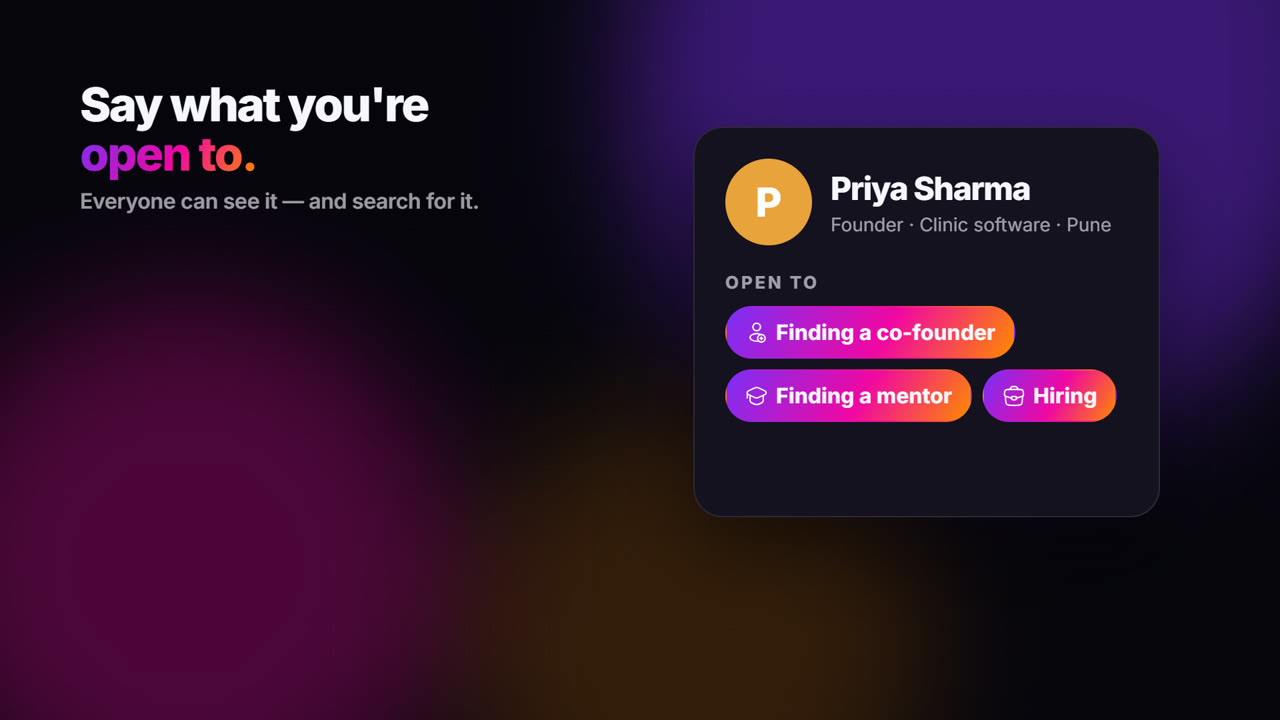
On Networthers, you can also mark yourself open to new clients. It shows on your profile and works as a search filter, so people looking for help can find freelancers who've said they're available.
Proof, even if you're new
If you don't have paid client work yet, create proof that looks like client work:
- A spec project: redesign a real company's checkout page, rewrite a real product's onboarding emails, or edit a public video — clearly labelled as an unsolicited concept.
- Work from your job, described in terms of the result (with confidential details removed).
- A small paid or discounted pilot for someone in your network, in exchange for a short written review you're allowed to share.
A simple starting offer
Clients find it easier to say yes to a defined first step than to an open-ended engagement. Examples: "a one-week audit of your store's speed, with a prioritised fix list," or "three blog posts in four weeks, with one round of edits each." A small, fixed-scope first project lowers the risk for both of you and often leads to the larger one.
Step 3: Know where freelance clients actually come from
There's no single best channel. Each has different strengths, and most successful freelancers use two or three together.
| Channel | Best for | Trade-offs |
|---|---|---|
| Your existing network | First clients, higher trust, better rates | Limited in size; you have to tell people you're available |
| Referrals from past clients | Steady, well-matched work | Only starts once you have clients; you must ask |
| Freelance marketplaces | Visibility when you have no network; payment protection; built-in billing | Heavy competition on many posts; platform fees; price pressure |
| Job boards and posted gigs | Clearly defined projects | Many applicants; slower responses |
| Direct outreach | Choosing exactly who you work with | Takes research and consistency; low reply rates if generic |
| Content and social media | Long-term inbound leads | Slow to build; needs regular posting |
| Communities and events | Relationships in your niche | Time-intensive; results are indirect |
| Networking platforms | Finding and messaging decision-makers by role and industry | Needs a clear profile and a thoughtful first message |
Marketplaces deserve a fair word: if you're starting from zero, they offer real advantages, including structured contracts and payment handling that a cold email can't. Many freelancers use them for early reviews and then shift more of their time to direct relationships as their network grows. If you use them, apply quickly, answer the client's actual question in the first two lines, and skip posts that are clearly a race to the lowest price.
Step 4: Start with the people who already know you
Your warmest leads are people who've already seen you work. Make a list of 30 to 50 names: former managers and teammates, classmates, people from past client projects, founders you've met, friends who run businesses. Then send each of them a short, personal note. Not a broadcast; one message per person.
Template — telling your network you're available:
Hi Ananya, hope the new role is going well. Quick update: I've gone independent and now build Shopify stores for D2C beauty brands — mostly speed fixes and checkout improvements. If anyone you know is wrestling with a slow or clunky store, I'd be grateful for an intro. And if there's ever anything I can do for you, just say.
Notice what it does: one line of personal context, one clear sentence about the niche, one specific type of person to refer, and an offer to help in return. It's easy to forward and easy to answer.
Expect most replies to be "good luck!" — that's fine. You're planting the idea so that when someone in their circle mentions the problem, your name comes up. For a deeper look at building and keeping these relationships, see our guide on how to network.
Step 5: Reach out directly to people who have the problem
Once your network knows you're available, build a weekly list of 10 to 15 new prospects who fit your niche.
Find the right person, not just the right company
In a small business, write to the founder. In a larger company, find the person who owns the result you improve: the marketing lead for content, the head of product for UX, the operations manager for automation.
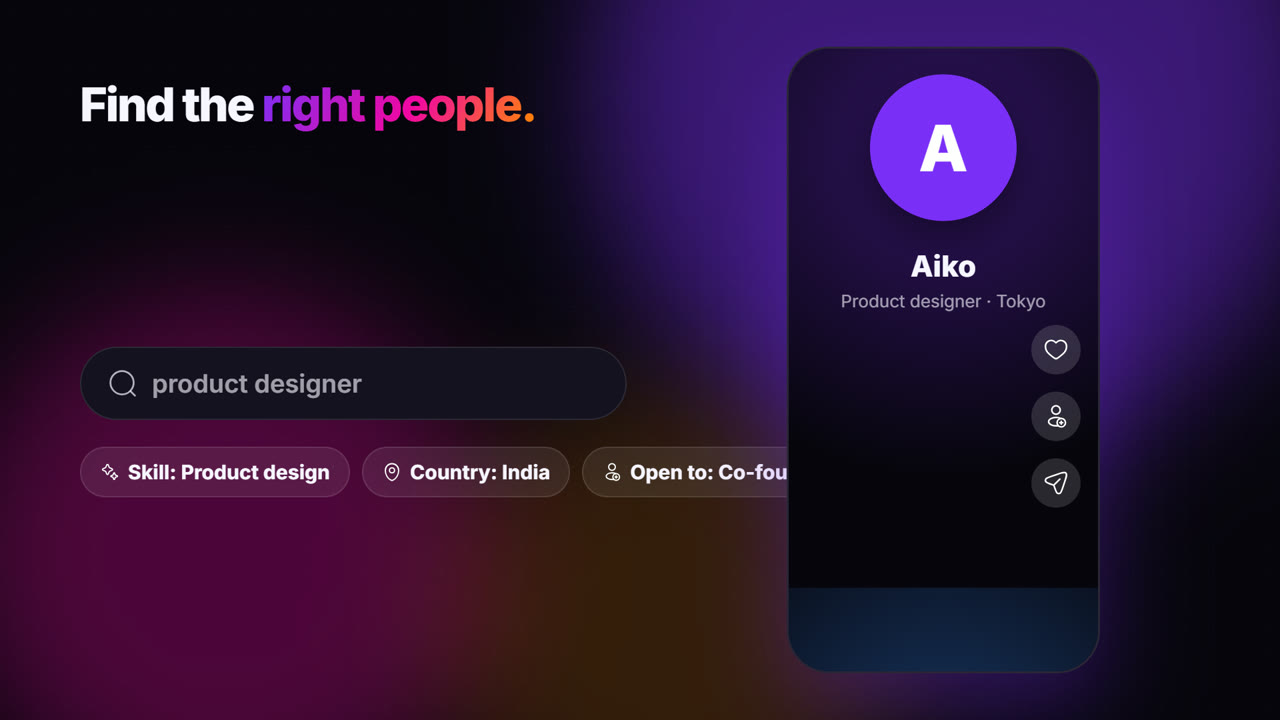
On Networthers, Discover lets you search people by role, company or skill, and filter by country and industry. You can also filter by what people are open to — for example, members who are hiring or looking for partnerships — which is a strong sign they're actively looking for help.
Write a first message about them
A good outreach message is short, specific and easy to reply to. It has four parts:
- Why them: something real you noticed about their business.
- The problem or opportunity: one specific observation.
- Your relevance: one line on what you do and for whom.
- A small ask: a question, not a sales pitch.
Template — direct outreach:
Hi Rohan, I came across your store while researching Indian skincare brands — love the ingredient breakdowns on each product page. I noticed the mobile product pages take a while to load on 4G, which usually costs sales. I fix exactly that for D2C brands. Would a short list of the three biggest speed issues I found be useful? No strings attached.
Template — connection note (under 300 characters):
Hi Meera — I write product docs for B2B SaaS teams and noticed your API launch last month. Happy to share a few ideas on making the getting-started guide easier for new developers, if useful.
That second template fits inside the 300-character note you can add to a Networthers connection request. Because connections there take two yeses and only connections can message each other, the note is your one chance to show you're relevant — which, in practice, makes the people who do accept far more likely to be genuinely interested.
Follow up once, politely
If there's no reply after five to seven days, send one short follow-up that adds something new: a quick idea, a relevant example, or a simpler question. After that, let it go. Persistence is good; pressure isn't.
Step 6: Turn a first conversation into a paid project
When someone agrees to talk, your job on the first call is to understand, not to pitch.
Questions to ask
- What prompted you to look at this now?
- What have you tried already, and what happened?
- What would a great result look like three months from now?
- Who else is involved in the decision?
- Is there a timeline or budget range you're working with?
After the call
Within a day, send a short written proposal that repeats their problem in their words, describes your recommended first step, gives a clear price and timeline, and lists what you need from them. Offer two options at most — a focused first project and a larger one — so the choice is easy.
Price for the result, not the hour
Hourly rates invite clients to compare you with the cheapest person they can find. A fixed price for a defined outcome ("a store that loads in under three seconds on mobile, delivered in two weeks") is easier for a client to approve and lets you benefit from getting faster at your work. Take an advance before you start, especially with new clients — 30 to 50 percent is common for freelancers.
Step 7: Turn one client into many
Your first few clients are worth more than their invoices. Each one is a source of proof, referrals and repeat work.
- Over-deliver on communication. Clients forgive small delays; they rarely forgive silence. A short update every few days builds more trust than you'd expect.
- Ask for a testimonial at the high point, right after a visible win, not weeks later.
- Ask for referrals specifically: "Do you know one or two other founders who might have the same issue?" is far more effective than "let me know if you hear of anything."
- Offer a natural next step: a monthly maintenance plan, the next phase of the project, or a quarterly check-in.
- Stay in touch after the project ends. A message every couple of months — an idea, a relevant article, congratulations on their news — keeps you top of mind for the next project.
Some of the people you meet will become more than clients: collaborators you share projects with, or mentors who've built the kind of practice you want. If that's useful to you, our guide on how to find a mentor covers how to ask without making it awkward.
Where Networthers fits for freelancers
Networthers is a professional networking platform with no feed and no posts — it's built only for meeting people professionally. For freelancers, a few things make it practical:
- "Open to: new clients" on your profile tells people you're available, and lets clients filter for freelancers who are.
- Discover searches by role, company and skill with filters for country, industry and what people are open to.
- Swipe shows profiles one at a time, full screen, if you'd rather browse people in your industry than run searches.
- Two-yes connections and connection-only messaging mean your inbox isn't flooded with cold pitches — and your own messages land with people who chose to connect.
- Messages carry documents (up to 50 MB), so you can share a proposal, a portfolio PDF or a short voice note right in the chat.
- 20 languages with one-tap translation for profiles and messages, which helps when a client works in a different language from you.
| Networthers | Freelance marketplaces | Cold email | |
|---|---|---|---|
| Find people by role, industry and country | Discover with filters | You respond to posted jobs | Needs separate research tools |
| See who is actively looking | "Open to" hiring and partnerships | Clients post jobs | No signal |
| Built-in contracts and payments | Not offered | Core feature | Not offered |
| Competing with many bids per project | Direct conversations | Common on popular posts | Direct conversations |
| Your message reaches the person | After they accept your request | Via proposals | Often filtered or ignored |
| Cost to start | Free account | Free to join, fees on earnings | Free, apart from tools |
It's honest to say what it doesn't do: Networthers doesn't host job posts, handle invoices or hold payments in escrow. Many freelancers will want a marketplace or their own contracts for that side of the work, and use Networthers for finding and getting to know the right people. You can read more on the freelance clients page.
A weekly routine to keep clients coming
Client work comes in waves. The freelancers with the steadiest income keep a small marketing habit going even when they're busy. Here's a routine that fits into about three hours a week:
| Day | Task | Time |
|---|---|---|
| Monday | Add 10 new prospects that fit your niche to a simple list | 45 min |
| Tuesday | Send 5 personalised outreach messages or connection requests | 45 min |
| Wednesday | Reply to conversations; send follow-ups due this week | 30 min |
| Thursday | Send 2–3 check-in messages to past clients or contacts | 20 min |
| Friday | Improve one piece of proof: a case study, portfolio item or profile line | 40 min |
Track three numbers each month: messages sent, conversations started, and projects won. Within a couple of months you'll see which channel and which message works best for you, and you can double down on it.
Common mistakes to avoid
- Leading with your rate. Lead with the problem; the price makes sense once the value is clear.
- Copy-pasting the same message to everyone. One specific observation beats a long list of skills.
- Underpricing to win. Low prices attract clients who negotiate hardest and refer least.
- Working without a written scope. Even a short email that confirms deliverables, timeline and payment prevents most disputes.
- Disappearing after delivery. The end of a project is the best moment to ask for a referral or a next step.
Frequently asked questions
How do I find clients for freelancing with no experience? Create proof first: one or two spec projects aimed at your niche, or a small discounted pilot for someone in your network in exchange for a review. Then tell everyone you know what you now do, and reach out directly to small businesses where your work would make a visible difference.
Which platform is best for finding freelance clients? There isn't one best platform. Marketplaces help when you have no network and want payment protection; direct outreach and networking platforms help you reach decision-makers without competing against a crowd of bids. Most freelancers do best combining two or three channels.
How many outreach messages should I send per week? Quality matters more than volume. Five to fifteen well-researched, personal messages a week, with one follow-up each, usually works better than a hundred generic ones.
How do I get repeat clients? Communicate often, deliver what you promised, suggest a sensible next step before the project ends, and stay in touch afterwards. Repeat clients and their referrals are often the largest source of a freelancer's work.
Is Networthers free for freelancers? Yes. Creating an account is free, and you can mark yourself open to new clients, search and connect with people, and message your connections.
Conclusion
Finding clients for freelancing is less about luck and more about a simple, repeatable system: a clear niche, visible proof, warm outreach to people who already know you, thoughtful messages to people who have the problem you solve, and care for every client so they bring you the next one. Start with your list of 30 names this week, write five specific messages, and keep the routine going even when you're busy — that's what turns a few projects into a practice. If you want a quiet place to find and meet the right people, without a feed to keep up with, create a free Networthers account, set yourself as open to new clients, and start your first list today.
Found this useful? Like it or pass it on.
Meet the people worth knowing
Networthers is professional networking with no feed and no cold messages. Free to join.
Join now